
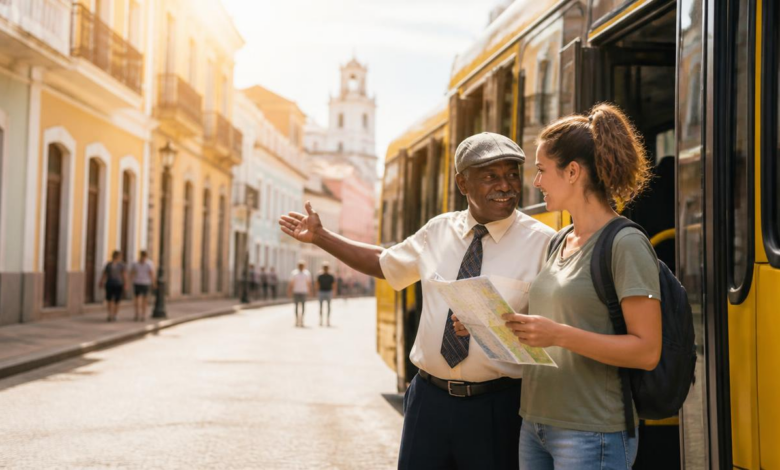
Some trips are built around famous sights. Others become unforgettable because of what happens between them: the side street with a family bakery, the ferry used mostly by commuters, the bus ride that reveals how a city actually breathes. That is where off the beaten path travel begins, and where many of the best travel memories quietly live.
If you want more than postcard moments, learning to read a place through its local transport network is one of the smartest moves you can make. Buses, trams, shared vans, ferries, and neighborhood trains do more than move you around. They connect you to daily rhythms, lower your costs, and open doors to authentic travel experiences that tours often miss.
This guide explores how to find hidden travel routes, use local transport secrets to your advantage, and build a trip that feels more personal than programmed. If you enjoy slow discovery, practical planning, and a little curiosity, this is your invitation to travel deeper.
Why Venture Off the Beaten Path? The Lure of Authenticity
Popular attractions can be worth seeing, but they rarely tell the whole story of a destination. A city’s character often lives in residential districts, local markets, small waterfronts, backstreet cafés, and ordinary transit stops where people begin and end their day. These places may not headline a brochure, yet they often deliver the strongest sense of connection.
There is also a practical reason to look beyond tourist centers: value. Budget travel transport options are usually designed for residents, not visitors, so they can dramatically reduce daily expenses. Instead of paying for private transfers or overpriced shuttle routes, you can stretch your budget toward food, longer stays, or one meaningful splurge.
Traveling this way can also support more thoughtful choices. When you spread your spending into local neighborhoods and rely on shared mobility, your trip can align more closely with responsible travel practices that support local communities. It is not just about avoiding crowds. It is about seeing how your presence fits into a place with more respect and awareness.
Another reward is emotional. Finding your own route creates a sense of participation rather than passive consumption. You are no longer just arriving at attractions. You are noticing patterns, making decisions, asking questions, and discovering how a place works. That shift turns sightseeing into cultural immersion travel.
The Art of Discovery: Unearthing Hidden Routes & Local Gems
Research Beyond Guidebooks: Local Forums & Blogs
If you are wondering how to find hidden gems when traveling, start by changing your sources. Big travel sites tend to repeat the same highlights. For fresher leads, look at neighborhood blogs, local event calendars, university community pages, café social media accounts, and expat forums. These often reveal weekend markets, hill viewpoints, food lanes, and waterside walks that are well loved but lightly advertised.
Search with intent. Instead of typing “best things to do,” try phrases like “best morning market near tram line,” “quiet district for sunset walk,” or “local bakery neighborhood train stop.” This kind of search surfaces places connected to real movement through the city, not only iconic landmarks. It is one of the simplest local travel hacks for adventurers.
Another useful trick is to work backwards from transport lines. Open a city map, identify end-of-line stations, ferry piers, or tram branches that move away from the center, then research what locals do there. Residential edges often lead to parks, food clusters, craft neighborhoods, and small museums with a very different atmosphere from downtown tourist zones.
Befriending Maps: Offline Tools & Unmarked Paths
Offline maps are essential for independent travel. Save your routes before leaving your accommodation, mark possible food stops, and note transfer points. Satellite view can be surprisingly helpful for spotting riverside paths, stair streets, market blocks, beach access points, and green corridors that regular transit maps do not emphasize.
When planning your day, combine digital maps with walking logic. For example, ride public transit out to a lesser-known district, explore on foot, then return by a different line. This creates a loop instead of a round trip and increases your chances of uncovering local gems.
It also helps to leave room for gentle improvisation. Not every hidden route needs to be dramatic. Sometimes it is simply a bus ride to a neighborhood market, a commuter ferry with a skyline view, or a suburban train stop beside a local food street. The point is not to chase secrecy for its own sake. It is to follow the everyday pathways that tourists often overlook.
The Power of Observation: Asking Locals & Following Instincts
Many secret travel spots are not truly secret at all. They are just known through habit. A fruit seller may mention a river walk. A barista might tell you which tram reaches a Sunday market. A hotel receptionist could point you to a neighborhood square that becomes lively at sunset. These recommendations tend to be more grounded than heavily optimized online lists.
Ask simple, open questions: “Where do people here go on a free afternoon?” “Which market do locals actually use?” “What is a good area to walk after taking the metro?” “Is there a bus to that beach, trail, or district?” This approach often produces better answers than asking for “hidden gems,” which can sound vague or performative.
Observation matters too. If you notice a long queue at a bakery two streets from the main avenue, pay attention. If commuters leave the tram and drift toward a lane full of lunch counters, follow that signal. Learning to travel well often means treating local behavior as your quiet map.
Mastering Local Transport: Your Guide to Navigating Like a Local
Decoding Buses & Trains: Routes, Fares & Etiquette
For many travelers, buses seem harder than trains because information can feel less visual. In reality, buses are often the key to non-touristy destinations. Start with the route number, final destination, and whether payment happens on board, at a kiosk, or through an app. If available, screenshots of route maps can save time when mobile data drops.
Trains and metros are usually easier to decode once you understand direction and transfer logic. Learn the name of the last station on your line, identify your exit station, and double-check whether express services skip smaller stops. These are simple habits to make navigating local transit far smoother.
Etiquette changes by country, but some rules travel well: let people exit first, keep bags close, avoid blocking doors, and lower your voice. During rush hour, compact behavior matters. On quieter regional routes, greeting the driver or thanking staff may be normal. These small habits help you blend in and make your journey enjoyable.
For day trips, intermodal planning is a major advantage. A suburban train plus a local bus may get you to a trailhead, village market, or seaside district for a fraction of a taxi fare. If you want to build these combinations with confidence.
Taxis, Rideshares & Tuk-Tuks: Safety & Negotiation
Not every destination is best explored entirely by public transport. Sometimes the final connection is a licensed taxi, local rideshare, tuk-tuk, or moto-taxi. The secret is knowing when these are practical and when they become a tourist trap. In many places, official apps reduce confusion because the route and fare are logged before the ride starts.
If no app is available, agree on the price before departure whenever meters are uncommon. Keep your destination written down, ideally in the local language or pinned on a map. For short rides, carry small bills. Drivers may genuinely have no change, but “no change” can also become an informal surcharge.
Use visible pick-up points and avoid entering unmarked vehicles that approach you aggressively near tourist zones. A calm refusal and a short walk to an official stand often changes the price conversation immediately. These are simple but valuable public transport abroad tips, especially in busy arrival areas.
Unique Local Conveyances: Ferries, Trishaws & More
Some of the best unique travel experiences begin with transport that feels ordinary to residents. Ferries can connect fishing neighborhoods and island communities. Shared minivans reach mountain towns. Jeepneys, collectivos, songthaews, and trishaws often serve routes that do not appear clearly in mainstream tourist planning. They require a little patience, but they can reveal the living geography of a region.
Before boarding, watch how locals use the service. Do they flag it down? Pay when they enter or exit? Tell the driver where they want to get off? Observing for even two minutes can answer most of your questions. If you are curious about these modes in more dept.
These modes are often part of a stronger story about sustainability too. Shared mobility reduces the footprint of individual journeys and helps visitors see destinations at human scale. For travelers who value sustainable tourism, local transport is not just cheaper. It is often the more thoughtful choice.
Payment Systems: Cash, Cards & Apps Across Cultures
One reason travelers struggle with tips for using public transport in foreign countries is that payment systems vary widely. Some cities are almost cashless. Others still rely on coins, reloadable cards, paper tickets, or exact change. Research this before arrival and assume that smaller towns may be less digitized than capital cities.
A good rule is to prepare for three scenarios at once: one digital option, one card option, and some local cash in small denominations. That flexibility prevents minor transit problems from becoming major itinerary delays. If you are balancing budget, fees, and everyday spending, practical money planning matters as much as route planning.
Practical Hacks for Immersive, Off-Trail Travel
Basic Language Phrases for Transport
You do not need fluency to travel like a local. A short list of phrases can transform your confidence: “Where is the station?” “Does this go to…?” “How much is the fare?” “Please tell me when to get off.” “Last stop?” and “Thank you.” Even imperfect pronunciation often earns goodwill because it shows effort.
Translation apps help, but it is smart to screenshot your destination name, hotel address, and key station names. Romanized spellings can differ from local signage, so having the place saved on your phone or written down avoids confusion. This is especially helpful when using shared transport with fewer formal stops.
Safety First: Tips for Local Travel
Common sense goes a long way. Keep your valuables secure, avoid displaying cash openly, and know your route before boarding if possible. On crowded lines, wear backpacks on the front or keep zippers clipped. When arriving after dark in an unfamiliar district, position yourself near better-lit exits and busier streets.
It is also wise to separate adventure from recklessness. Not every unmarked lane needs exploring, and not every cheap ride is worth taking. Trust your instincts. If a route feels unusually isolated, poorly maintained, or inconsistent with local advice, reassess. For a deeper approach to protecting your gear and documents, read our guide to smart travel security abroad.
Blending In: Respecting Local Customs
The goal of authentic travel is not performance. It is participation with humility. Dress appropriately for the district, especially in residential or religious areas. Keep noise low on public transport. Avoid treating ordinary neighborhoods like open-air attractions. When taking photos, be sensitive to whether people are commuting, working, or spending time with family.
Respect also extends to spending. If you discover a family-run café or local market through transit exploration, support it thoughtfully. Buy something, be patient, and follow local routines. One of the best ways to discover local culture through transport is to remember that the system is built for daily life first and visitors second.
Food can become your best reward for moving beyond tourist corridors. Some of the most memorable meals are found by following bus routes into residential zones, stopping near markets, or asking station vendors where they eat after work. That is often the real answer to finding authentic eateries using public transit.
Packing light makes all of this easier. Stairs, station transfers, ferry ramps, and crowded minibuses are much more manageable when your bag is compact. If your trip includes many transport changes, mobility itself becomes part of comfort. Lighter gear gives you freedom to pivot, wander, and say yes to unexpected detours.
Your Journey Begins: Embrace the Unknown
The most rewarding trips rarely come only from checking famous sights off a list. They come from paying attention to the in-between spaces: the tram ride into a residential quarter, the local ferry at sunset, the side street discovered while changing buses, the conversation that sends you toward a market you had never heard of. That is where off the beaten path travel becomes real.
You do not need to be fearless to do this well. You only need curiosity, a little preparation, and the willingness to move at local pace. Learn the route, carry small cash, ask simple questions, and stay observant. Over time, these habits become your own set of local transport secrets.
Travel deeper, spend smarter, and let ordinary movement lead you somewhere memorable. The world is full of famous places, but some of its best stories begin on the quieter route.
Explore Your Next Adventure: What hidden routes have you discovered? Share your tips in the comments below, and keep exploring Happy Day Turismo for more ideas on authentic, practical journeys.